
Loading content...

Articles
Insurance-Linked Investments: Resilient, Uncorrelated Returns for Volatile Markets
Insurance-Linked Investments: Resilient, Uncorrelated Returns for Volatile Markets
Institutional investors face a landscape of persistent market volatility. Traditional portfolio diversification is challenged as equities and bonds increasingly move in tandem. Insurance-Linked Investments (ILIs), especially Catastrophe Bonds (cat bonds) and collateralized reinsurance, offer a compelling solution, returns that are largely uncoupled from financial market cycles and driven by insurance event outcomes.
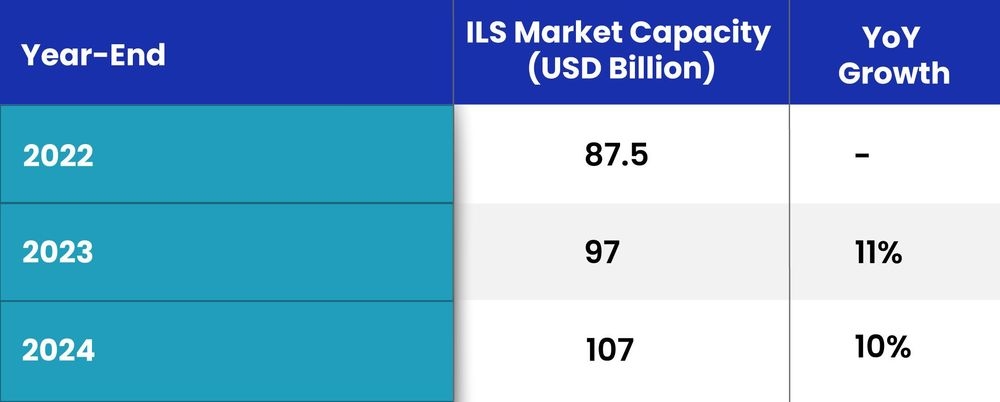
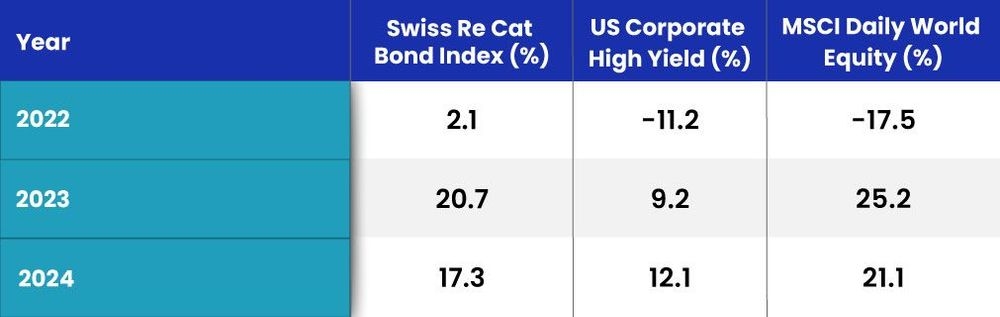
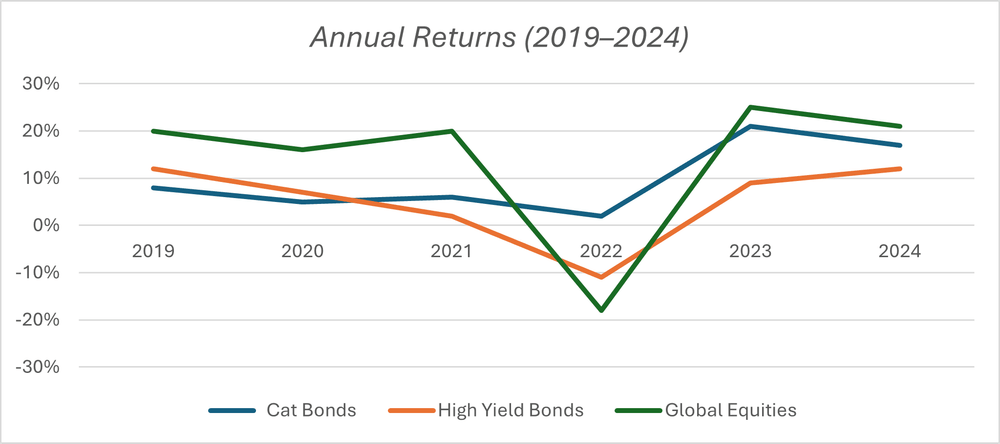
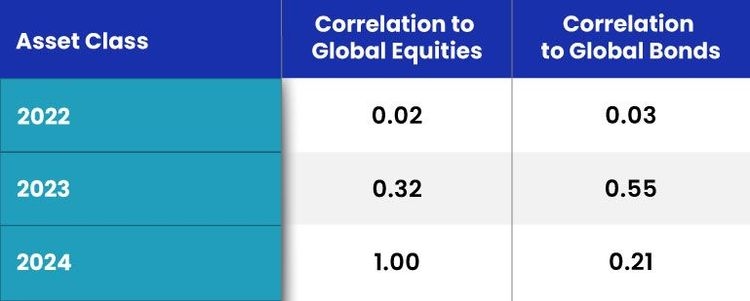
The first three quarters of 2025 offered a real-time stress test for insurance-linked investments, combining early-year catastrophe losses with mid-year repricing and recovery. After a volatile start driven by California wildfire losses in January, the ILS market demonstrated resilience through disciplined underwriting, strong coupon carry, and improved pricing across new issuance.
The ILS Advisers Fund Index turned positive by April 2025, marking an inflection point as loss impacts were absorbed and higher spreads began to support returns. Performance through Q3 reinforced a familiar but critical pattern within the asset class: public catastrophe bond strategies recovered more quickly, while private ILS strategies experienced greater early-year volatility but rebounded as pricing reset.
For the first four months of 2025:
By Q3 2025, most diversified ILS portfolios had stabilized, supported by reduced loss activity outside North America and higher risk-adjusted yields across both public and private strategies.
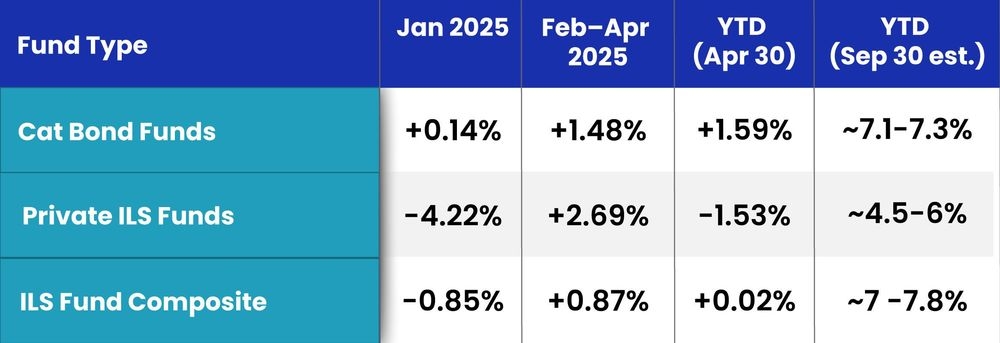
Q3-2025 takeaway:
Even in an active catastrophe year, insurance-linked investments once again demonstrated their defining characteristic: the ability to absorb loss events, reprice risk, and return to positive performance within the same calendar year, reinforcing their role as a resilient portfolio diversifier.
The 2025 experience reinforces several allocation principles for institutional investors evaluating or scaling exposure to insurance-linked investments.
Insurance-Linked Investments have strengthened their position as a core institutional portfolio diversifier, delivering resilient, uncorrelated returns through periods of market stress and climate-driven uncertainty. As correlations across traditional asset classes continue to rise, ILS provide a structurally distinct source of return, one driven by insurance risk rather than financial market cycles.
However, the durability of these outcomes increasingly depends on how effectively risk is modeled, priced, and monitored. Robust data foundations, advanced catastrophe modeling, and scalable risk intelligence are now central to sustaining performance in a more volatile and climate-sensitive risk environment, capabilities increasingly supported by AI-powered insurance analytics.
For forward-looking CXOs and investment committees, aligning ILS strategies with disciplined risk governance and advanced insurance analytics is no longer optional. It is the prerequisite for sustaining returns, managing tail risk, and preserving the diversification benefits that define the asset class.
beinsure.com
swissre.com
ajg.com
artemis.bm
All rights reserved ©2026 Decimal Point Analytics Pvt. Ltd.