| |
| |
|
|
| |
|
From Risk Visibility to Resilient Decisions: Where Data and AI
Strengthen Performance
|
|
|
|
July’s edition highlights how data, analytics, and AI-led execution
are helping organizations identify hidden risks, modernize financial
operations, and build greater resilience across insurance, private
credit, investment management, lending, and manufacturing.
|
|
|
|
From understanding portfolio-wide exposure and building resilient
private credit data pipelines to modernizing loan processing,
strengthening financial reporting, and improving currency risk
management, this month’s stories show how organizations are turning
fragmented data into trusted, decision-ready intelligence.
|
|
| |
|
|
| |
|
|
| |
|
|
| |
|
Exposure management is more than understanding individual risks. It
is about identifying where exposures are concentrated, how they are
connected, and how a single event could create losses across an
entire portfolio.
Using the $15 billion Thailand floods as a defining example, this
article explains why insurers need stronger data quality,
accumulation monitoring, scenario analysis, and portfolio-level
visibility to manage emerging catastrophe and systemic risks.
|
|
Algebraic topology offers a compelling way to examine
diversification by studying the shape and connectivity of market
relationships. But does mathematical sophistication create better
risk signals?
Drawing on a controlled portfolio experiment, this CEO’s Desk
article shows that the topological signal added no predictive value
beyond established measures. It reinforces a clear lesson: use the
right tool for the right risk question.
|
|
| |
|
|
| |
|
|
| |

|
|
|
Currency Risk Management
|
|
|
|
Currency volatility can quickly affect investment
performance when forecasting, hedging, scenario
analysis, and exposure monitoring depend on manually
maintained spreadsheets.
|
|
|
|
|
|
Decimal Point Analytics helps investment and risk teams build an
engineered currency risk framework combining predictive models,
currency ranking, rules-driven hedging, stress testing, validated
data pipelines, and real-time dashboards. The solution enables
faster responses to volatility while improving transparency,
control, and auditability across currency risk decisions.
|
|
|
|
|
|
| |
|
|
| |
|
|
| |
|
|
| |
|
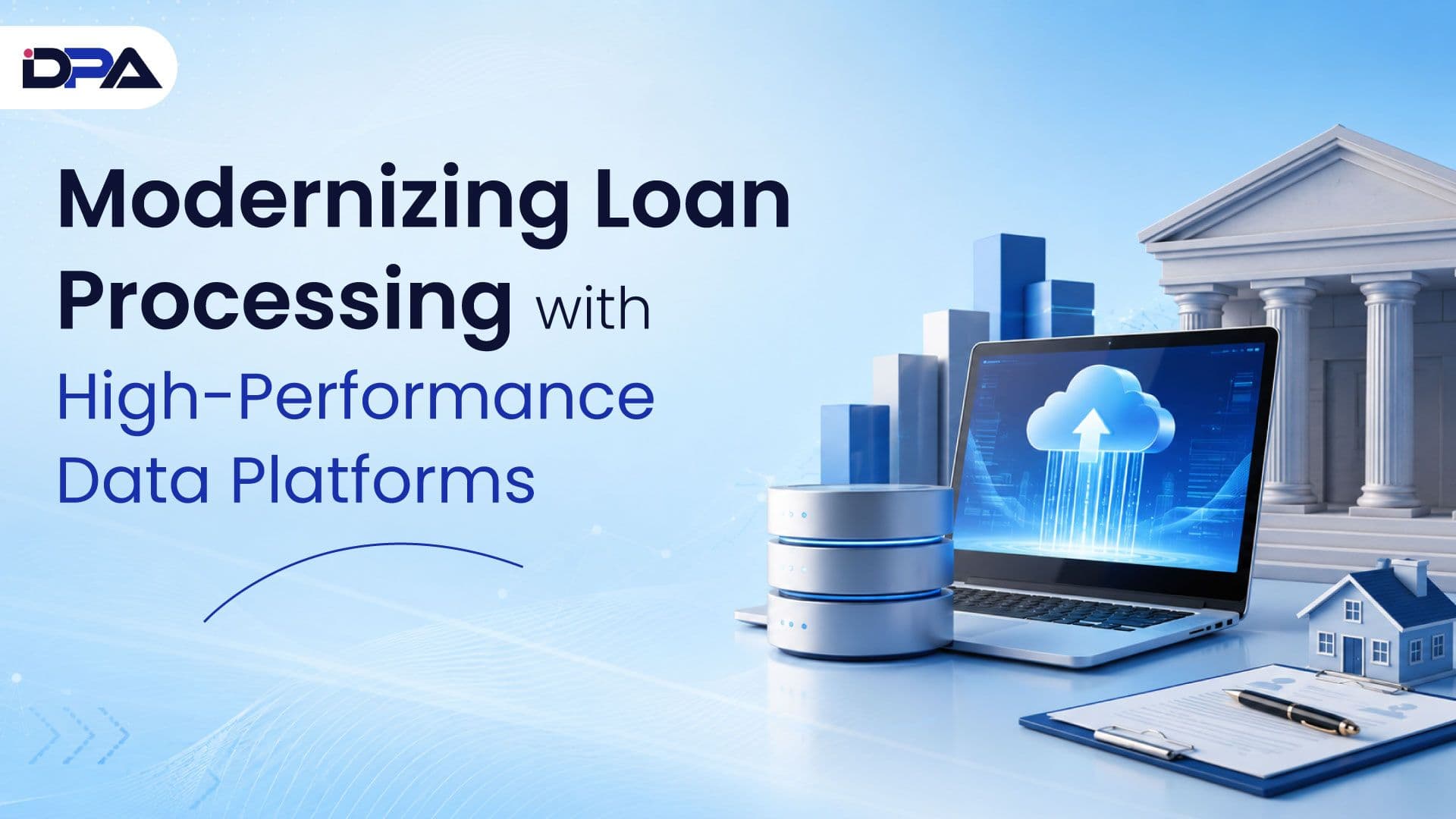
A multi-strategy real estate finance firm needed to modernize loan
data workflows that relied on manual entry, fragmented ETL
pipelines, and legacy processing systems.
Decimal Point Analytics implemented an automated database and ETL
modernization framework that improved processing speed and reporting
reliability. The solution delivered 50% faster loan data processing,
eliminated 80% of manual errors, and created a scalable,
governance-ready foundation for financial
operations.
|
|
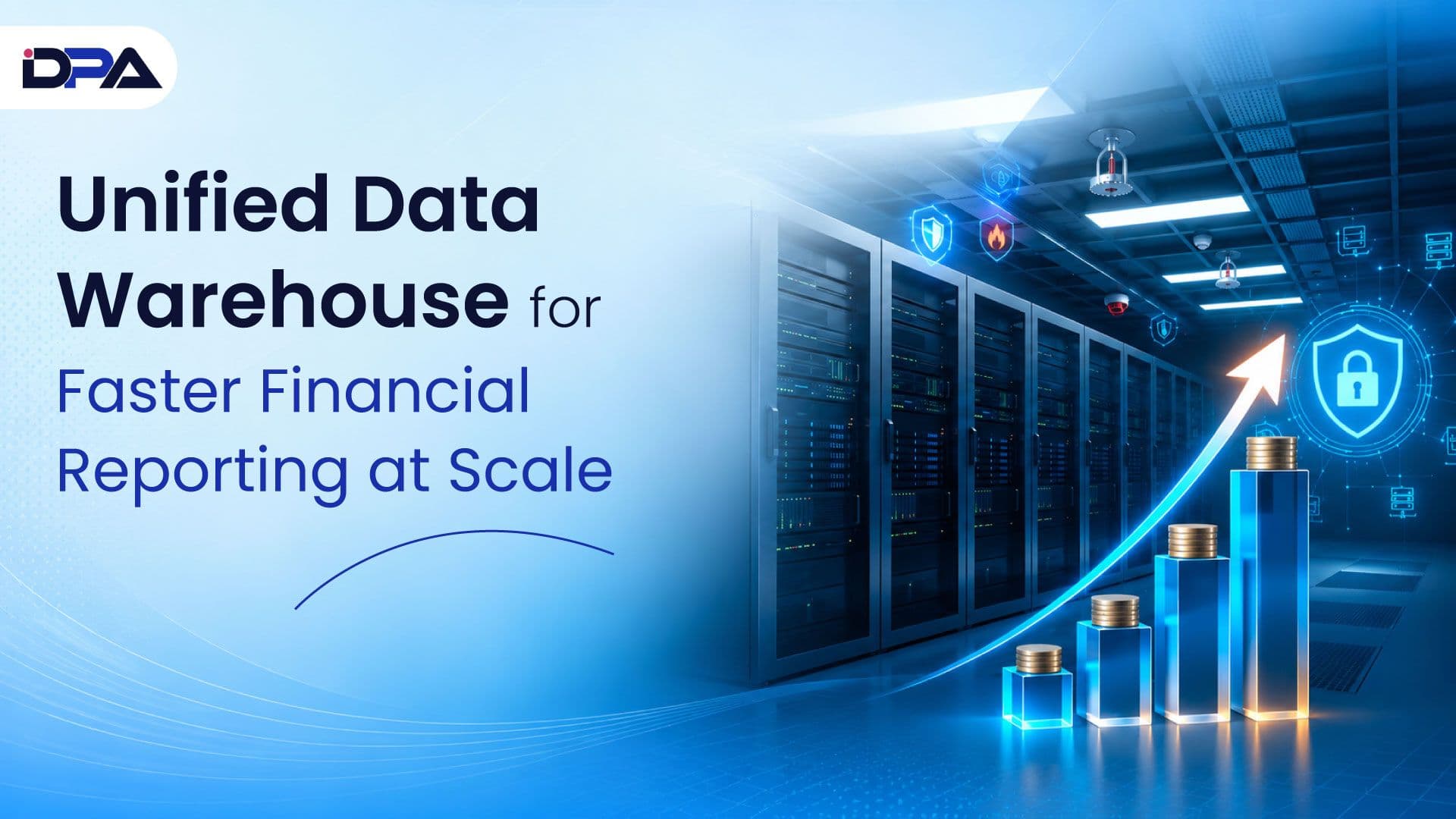
A diversified financial services group was managing financial and
historical data across fragmented spreadsheets and multiple formats,
resulting in slower reporting, calculation errors, and limited
traceability.
Decimal Point Analytics developed a unified data warehouse with
standardized ingestion, automated processing, exception handling,
and single-click reporting. The solution reduced data processing
time by 70%, lowered operational costs by 25%, and brought query
resolution down from days to two to three hours.
|
|
| |
|
|
| |
|
|
| |
|
|
| |
|
|
| |
|
Gaurav Gupta, Managing Partner at Decimal Point Analytics, shares
his perspective on how AI is transforming investment research by
processing, organizing, and connecting datasets at a scale beyond
traditional spreadsheet-led analysis.
The conversation explores how AI can surface early investment
signals, strengthen risk assessment, support customized financial
models, and help fund managers make better-informed decisions
without replacing human expertise and oversight.
|
|
Our Co-founder and CEO, Shailesh Dhuri, shares why AI should support
investment decisions without replacing human judgement, particularly
during periods of market volatility.
In an exclusive interview with Free Press Journal, he explains how
Rakshak, Decimal Point Analytics’ behavioural AI platform, can
identify emotion-driven investor behaviour and provide timely,
personalized nudges. The feature reinforces the importance of using
AI as a guide while keeping the final decision with the investor.
|
|
| |
|
|
| |
|
|
| |
|
|
|
|
|
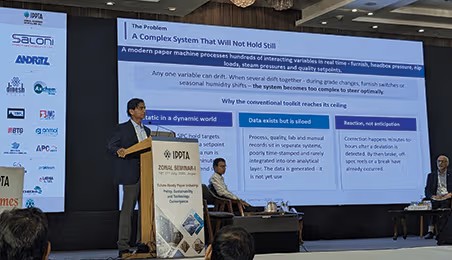
Representing Decimal Point Analytics, Ajay Jindal,
EVP, presented a technical paper on applying AI,
machine learning, Process Digital Twins, Product
Clones, and the proprietary CrossRank AI engine to
predictive maintenance, quality stabilization, and
process simulation.
The presentation demonstrated how AI-powered process intelligence
can reduce paper breaks, improve throughput, optimize energy
consumption, and support more resilient manufacturing operations.
|
|
|
|
|
|
| |
|
|
| |
|
|
| |
|
|
|
Privacy Disclaimer
|
|
|
|
We receive and store information about you collected from our
third-party data providers using publicly accessible information. We
use the information to provide, analyse, administer, enhance and
personalize our services & marketing efforts to communicate with
you concerning our services and products. For more details regarding
our privacy guidelines, please read the privacy policy
and terms-of-use
on our website. In case you don't want us to contact you regarding
our services and products catalog, please email at marketing@decimalpointanalytics.com
to unsubscribe.
|
|
|
|
www.decimalpointanalytics.com
|
|
|
|
|