
Loading content...

Articles
Beyond the Balance Sheet: The Next Generation of Underwriting in Trade Finance
Beyond the Balance Sheet: The Next Generation of Underwriting in Trade Finance
The trade finance market is undergoing a significant transformation, driven by evolving global trade dynamics, technological innovation, and shifting regulatory environments. Projected to grow from $49.48 billion in 2024 to $52.61 billion in 2025, reflecting a CAGR of approximately 6.3%, the trade finance sector demands new underwriting paradigms that go beyond traditional balance sheet analysis.
Global commerce is rapidly reshaping through regional trade agreements such as RCEP and USMCA, realignments in supply chains, and the rise of geopolitical and financial volatility. These shifts challenge traditional underwriters who rely heavily on financial statements and historical credit data. Modern underwriting must extend beyond the balance sheet, incorporating real-time risk insights, regulatory complexities, and a nuanced understanding of localized market conditions.
Particularly, emerging markets and SMEs historically underserved segments need more advanced and inclusive credit assessments that consider operational, behavioral, and transactional characteristics.
At the heart of next-generation underwriting lies digital transformation powered by artificial intelligence (AI), machine learning (ML), and blockchain technologies. These tools revolutionize underwriting by automating complex, time-consuming tasks, enhancing risk prediction models, and improving customer interactions.
Key technological innovations include:
The next generation underwriting process involves several interconnected stages that leverage technology and data analytics to improve speed, accuracy, and risk understanding. Below is a simplified workflow highlighting the typical steps:
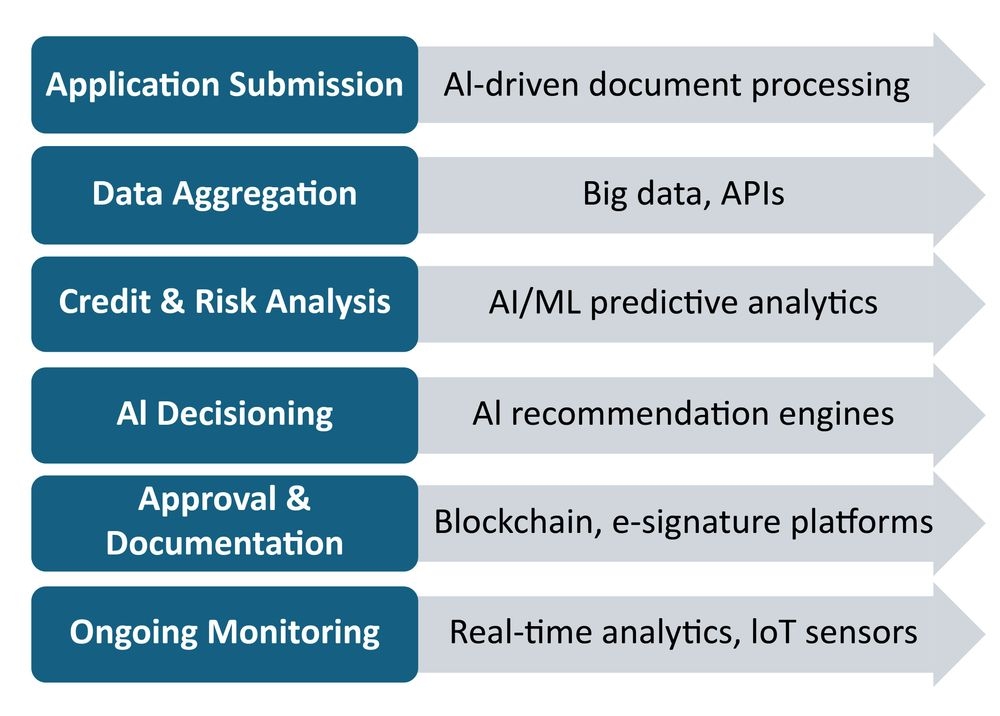
The trade finance market is expected to grow from $49.48 billion in 2024 to $52.61 billion in 2025, reflecting a growth rate of approximately 6.3%. This rise highlights the sector’s momentum toward embracing digital and AI-enhanced underwriting solutions.
Financial institutions adopting next-generation underwriting models stand to gain:
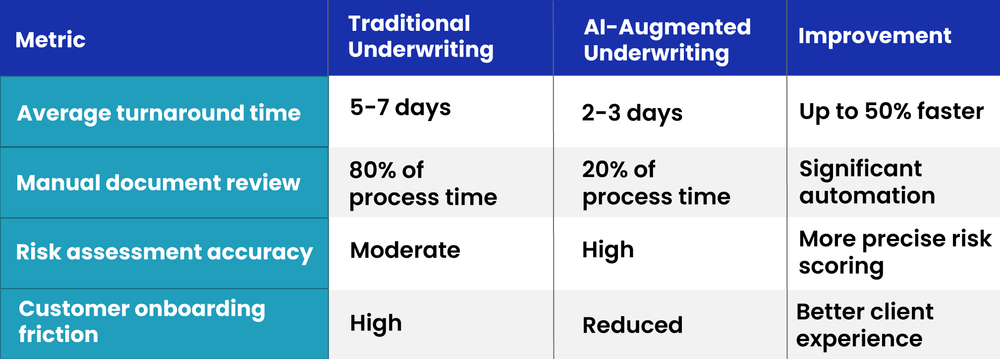
Trade finance underwriting is evolving far beyond traditional financial metrics, driven by technological innovation and a more complex global trading environment. AI, big data analytics, and integrated digital platforms enable underwriters to assess risk more precisely while enhancing operational efficiency and customer experience.
Institutions that invest in these next-generation underwriting capabilities will not only be better prepared to manage emerging risks but also well-positioned to capitalize on expanding opportunities within the trade finance market.
All rights reserved ©2026 Decimal Point Analytics Pvt. Ltd.